Steel buildings stand up well to snow and wind, but bare steel does little to hold heat. That is why metal building insulation matters so much in New England. The right system keeps the space comfortable, cuts heating costs and helps control condensation.
This guide covers the most common options and how to choose between them.
Why Metal Building Insulation Matters
Steel conducts heat quickly. Without insulation, heat escapes through the roof and walls, and cold surfaces form inside. As a result, warm, moist air can condense on the steel and drip onto equipment, stored goods or finished floors.
Good insulation solves several problems at once. It reduces heat loss, it keeps interior surfaces warmer, and it helps prevent condensation. In addition, it quiets rain and hail noise on the roof.
Common Metal Building Insulation Systems
Most steel buildings use one of a few proven approaches. Each one has strengths, so the best choice depends on how you will use the building.
Faced Blanket Insulation
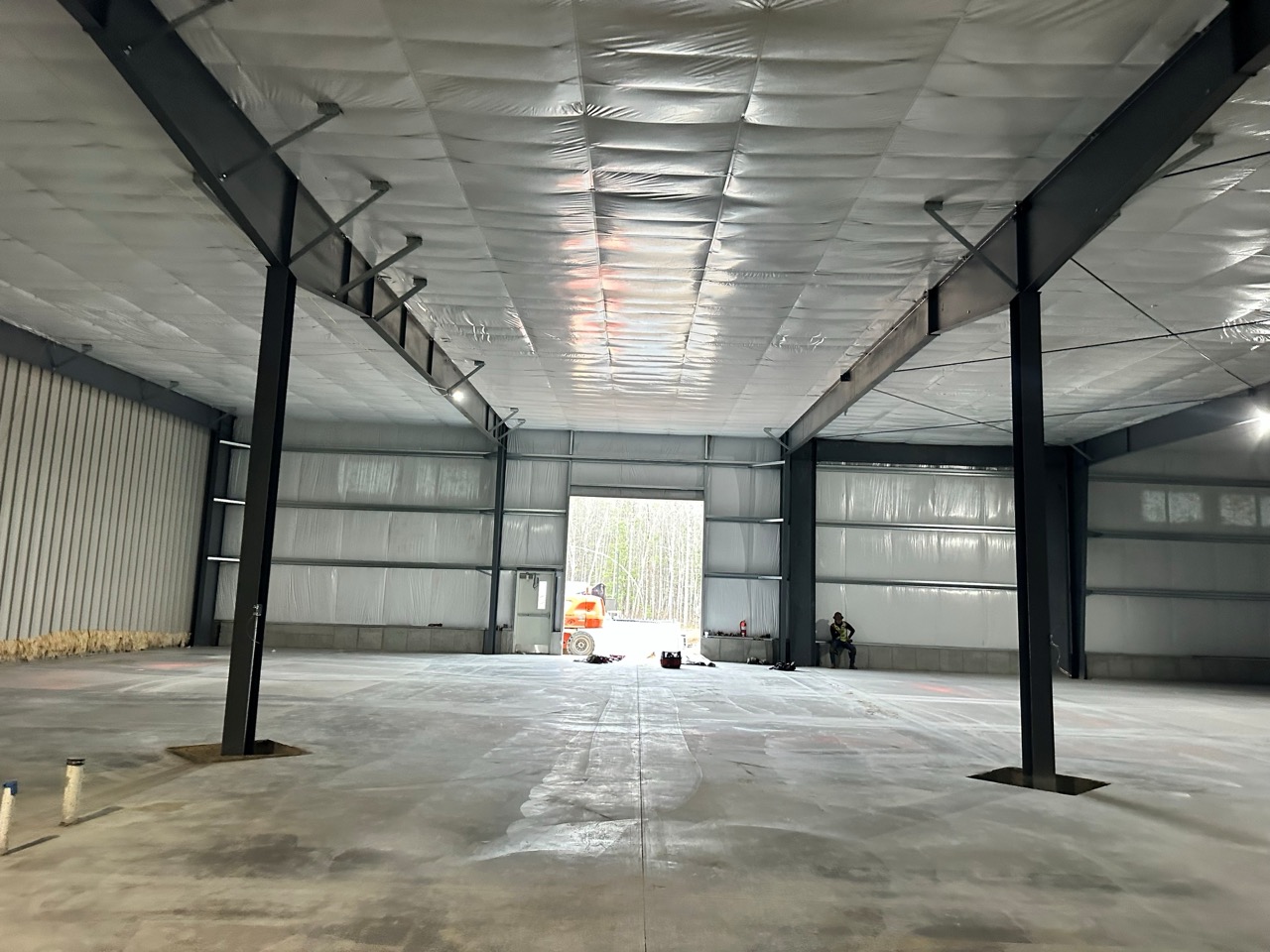
Installers roll fiberglass blankets with an attached vapor-retarder facing over the purlins and girts, then fasten the panels on top. This is the most common system for new steel buildings. It is cost-effective, and the facing gives the interior a clean, finished look.
Liner Systems
Liner systems add a fabric or panel layer below the roof framing. This creates a deeper cavity, so you can install thicker insulation. Therefore, liner systems suit heated shops, offices and other spaces where energy use matters.
Insulated Metal Panels
Insulated metal panels combine an exterior skin, a foam core and an interior skin in one product. They offer strong thermal performance and a finished interior. However, they usually cost more than blanket systems.
Spray Foam
Spray foam fills gaps and seals air leaks well. Contractors often use it in retrofits or around complex details. On the other hand, it needs careful application and adds cost.
Choosing Metal Building Insulation for Your Use
Start with how you will heat and use the building. For example, an unheated storage building may only need enough insulation to control condensation. A heated workshop or barndominium, by contrast, needs a much higher level of performance.
Also think about future plans. If you might heat the building later, insulating well from the start costs far less than retrofitting. Our guide to barndominium planning covers this for living spaces.
Don’t Forget the Vapor Retarder and Air Sealing
Insulation only works well when it stays dry. A continuous vapor retarder on the warm side keeps moist indoor air out of the insulation. In addition, sealing gaps at doors, eaves and penetrations stops drafts and moisture.
Our article on how to prevent condensation in a metal building explains why this detail matters so much.
Upgrading Insulation in an Existing Building
Many older steel buildings have thin or damaged insulation. Fortunately, you can often upgrade without removing the roof or wall panels. We install upgraded roof and wall insulation with new vapor barriers on existing buildings. Learn more on our metal building energy upgrades page.
For general guidance on insulation and energy efficiency, ENERGY STAR offers helpful resources.
Talk to Maine Metal Buildings
Need help choosing insulation for a new or existing building? Tell us how you use the space, and we will recommend options. Our team typically responds within 24 hours, and detailed quotes are usually ready within 7–10 business days. Contact us or call (207) 591-0196 to start your project.