Few things frustrate a steel building owner more than water dripping from the ceiling on a dry day. In most cases, the culprit is not a leak. Instead, it is metal building condensation, and you can usually prevent it with the right design.
What Causes Metal Building Condensation?
Air always holds some moisture. When warm, humid air touches a cold surface, it cools down and releases that moisture as water. You see the same thing on a cold glass of water on a summer day.
Steel panels get cold quickly, especially on winter nights. As a result, warm air inside the building condenses on the underside of the roof and walls. The water then drips, soaks insulation or runs down the walls.
Common Sources of Indoor Moisture
Several everyday activities add moisture to the air inside a building. For example:
- Vehicles and equipment that bring in snow and rain
- Livestock, which release moisture as they breathe
- Unvented heaters that burn propane or kerosene
- Fresh concrete slabs, which release moisture as they cure
- Washing equipment or floors inside the building
Reducing these sources helps, but good building design does most of the work.
How Insulation Prevents Metal Building Condensation
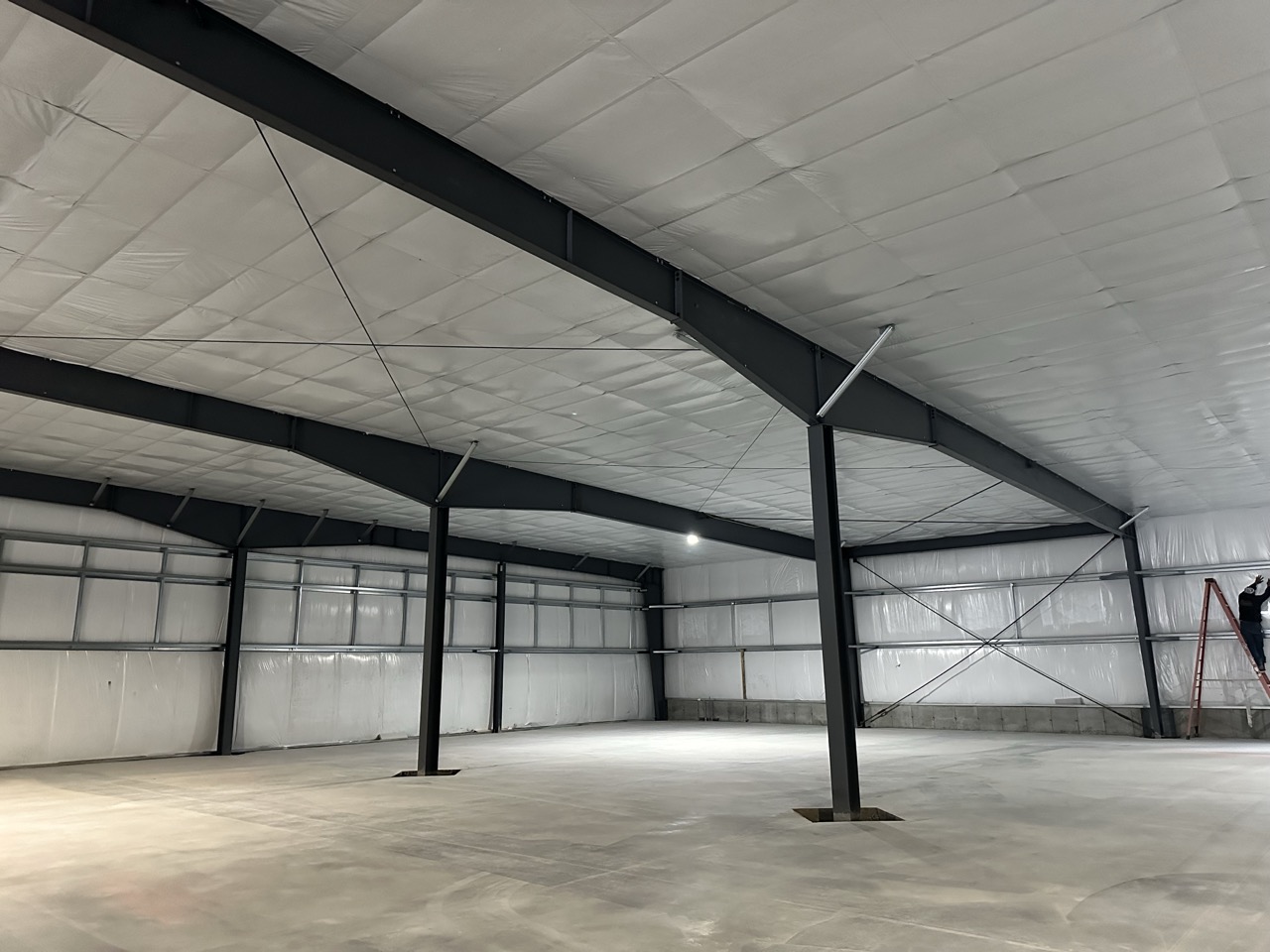
Insulation keeps the interior surface warmer than the dew point, so moisture does not form. However, the insulation must have a continuous vapor retarder on the warm side. Otherwise, moist air can pass through it and condense on the cold steel behind it.
Seal every seam, tear and penetration in the facing. Even small gaps can let enough moisture through to cause problems. Our guide to metal building insulation compares the main systems.
Ventilation Controls Moisture
Ventilation removes moist air before it can condense. Ridge vents, wall louvers and exhaust fans all help. In addition, they balance temperatures and support a healthier indoor environment.
The right approach depends on how you use the building. For instance, a livestock barn needs far more ventilation than a dry storage building.
Other Ways to Reduce Metal Building Condensation
A few other steps make a big difference:
- Use vented heaters instead of unvented ones.
- Place a vapor barrier under new concrete slabs.
- Keep gutters and downspouts working, and slope the ground away from the building.
- Repair torn insulation facing promptly.
- Keep doors closed during humid weather when you can.
Fixing Condensation in an Existing Building
If your building already drips, you have options. We help owners prevent moisture buildup, interior drips and corrosion with upgraded insulation, vapor control and ventilation. Often, we can do this without removing the existing roof or wall panels. See our energy upgrades page for details.
For broader building science background, the Metal Building Manufacturers Association offers resources on steel building systems.
Talk to Maine Metal Buildings
Dealing with dripping or damp insulation? Send us photos and a description of the problem, and we will suggest next steps. Our team typically responds within 24 hours, and detailed quotes are usually ready within 7–10 business days. Contact us or call (207) 591-0196 to start your project.